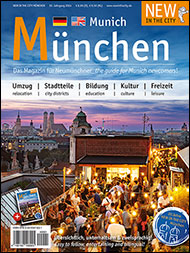
Bavaria is different. Anyone moving here from elsewhere in Germany notices it pretty quickly. You order a Radler instead of an Alster, ask for a Semmel instead of a bread roll, and say “Grüß Gott” instead of “Guten Tag.” The CDU is called CSU here, and even the weather has a character of its own – the warm Föhn winds are known to bring sudden shifts in both atmosphere and mood.
And yet: Munich is not Bavaria. The state capital follows its own rules. Lederhosen and traditional clichés are certainly part of the cityscape – but more as a backdrop for tourists or Oktoberfest than everyday life. Day to day, Munich presents itself as an international, modern metropolis with a strong sense of identity.
Around 1.6 million people now live in Munich – and the number continues to grow. More than 30 percent of residents have an international background, and every month, over 10,000 people move into the city while a similar number leave. This constant movement is part of Munich’s DNA: the city attracts, evolves, and yet somehow remains remarkably consistent in its character.
Economically, Munich has been one of Germany’s leading cities for years. Major corporations, innovative start-ups, and a strong creative scene make it one of Europe’s most attractive business locations. Construction, development, and investment are ongoing – even though housing remains scarce and highly sought after. The term “Boomtown Munich” is more than just a label; it captures a mindset defined by growth, energy, and a constant sense of momentum.
But what truly defines Munich is not just numbers or economic strength – it’s the people who live here. Everyone brings a piece of their own world into the city, shaping it in small but meaningful ways. That’s exactly where its appeal lies.
So, dear newcomer: arrive, get involved, and make Munich your own. But remember one thing – at the bakery, it’s still called a Semmel. Some things in Bavaria never change.